Which Vegetables Can Dogs Eat? Safe, Healthy, Toxic & Vegetables to Avoid
Which vegetables are good for dogs, and which vegetables can be dangerous or toxic? Many pet parents share vegetables with their dogs because vegetables can…
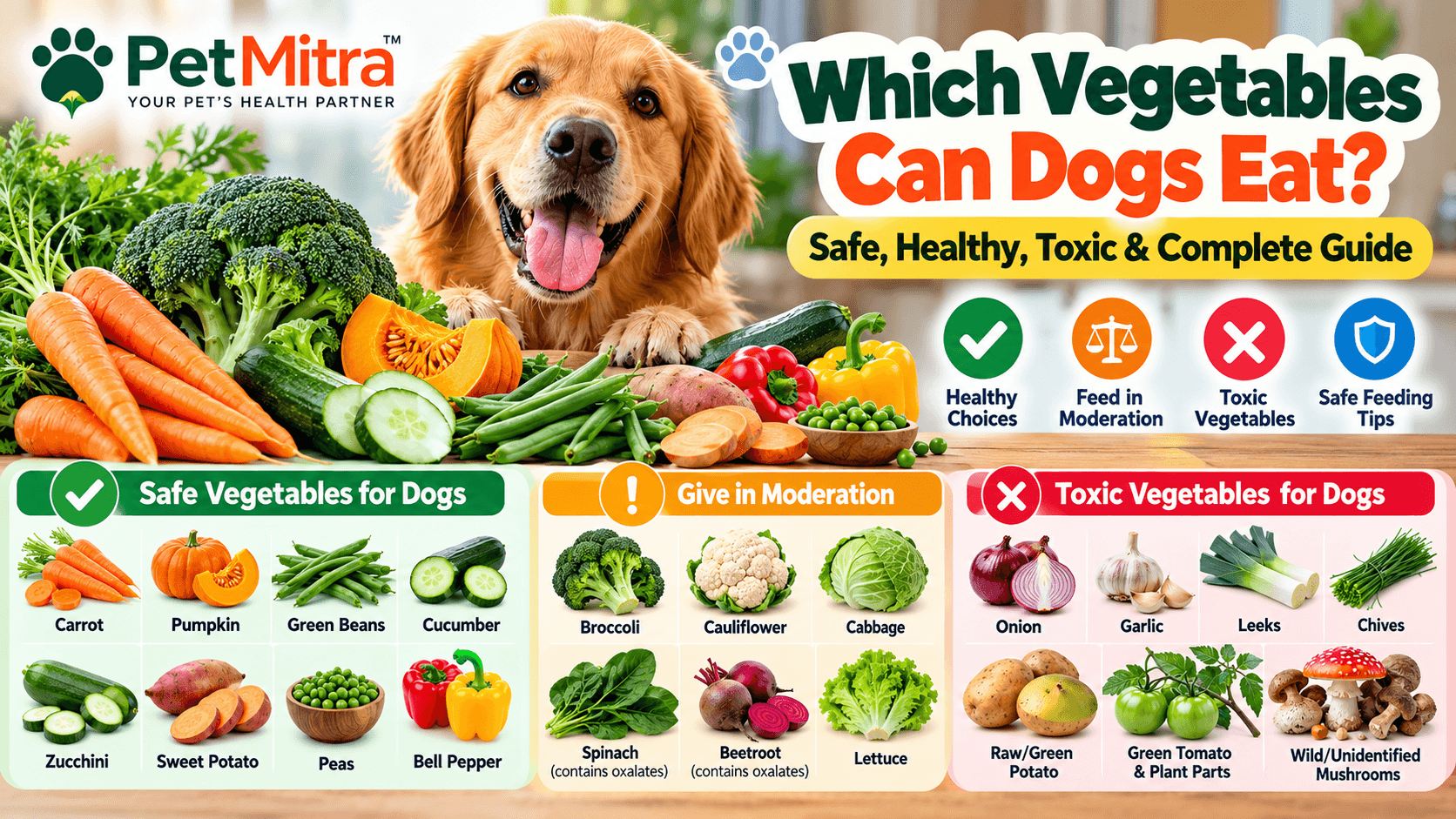
Which vegetables are good for dogs, and which vegetables can be dangerous or toxic? Many pet parents share vegetables with their dogs because vegetables can provide fiber, water, vitamins and other nutrients. However, not every vegetable is suitable for dogs, and some plant foods can cause serious health problems.
Some vegetables are excellent occasional treats, some should only be given in moderation, and a few—particularly onion, garlic, leek and chives—should be avoided because they can damage red blood cells and cause anemia.
In this PetMitra guide, we explain which vegetables dogs can eat, which vegetables should be limited, which vegetables should be avoided, why certain vegetables are toxic, and how to safely add vegetables to your dog's diet.
Quick Answer: Which Vegetables Are Safe for Dogs?
Many common vegetables can be safely given to healthy dogs in small amounts.
Generally dog-friendly vegetables
Carrots
Pumpkin
Green beans
Cucumber
Zucchini
Cooked sweet potato
Peas
Bell peppers
Broccoli in small amounts
Cauliflower in small amounts
Celery
Lettuce
Cooked plain squash
However, safe does not mean unlimited.
Vegetables should normally be used as an occasional addition or treat rather than replacing a complete and balanced canine diet.
Which Vegetables Are Toxic to Dogs?
The most important vegetables and related plant foods to avoid include:
❌ Onion
❌ Garlic
❌ Leeks
❌ Chives
❌ Large amounts of wild or unidentified mushrooms
❌ Raw or green potatoes
❌ Tomato leaves and stems
❌ Green/unripe tomatoes
The toxicity and risk are different for each food.
1. Onion – Toxic to Dogs
Onions should not be fed to dogs.
Onions contain sulfur-containing compounds that can cause oxidative damage to red blood cells.
This can result in hemolytic anemia.
Dogs can potentially be exposed to onion through:
Raw onion
Cooked onion
Fried onion
Onion powder
Onion-containing sauces
Gravies
Soups
Baby food containing onion
Seasoning mixes
Importantly, concentrated onion powder can be particularly relevant because it may be present in processed foods in a much higher concentration than fresh onion.
Possible symptoms
Signs may not always appear immediately.
Possible symptoms include:
Weakness
Lethargy
Reduced appetite
Vomiting
Diarrhea
Pale gums
Rapid breathing
Increased heart rate
Dark or reddish urine
Exercise intolerance
Collapse in severe cases
If a dog has consumed a significant amount of onion, veterinary assessment is recommended.
2. Garlic – Toxic to Dogs
Garlic belongs to the same Allium family as onion and should not be intentionally fed to dogs.
This includes:
Raw garlic
Cooked garlic
Garlic powder
Garlic paste
Garlic seasoning
Garlic can cause oxidative damage to erythrocytes and may result in hemolytic anemia.
Important misconception
You may see products claiming that small amounts of garlic are useful as a natural flea treatment.
Do not use garlic as a substitute for proven veterinary parasite prevention.
The potential toxicity of Allium plants is a much more important consideration than unproven home remedies.
3. Leeks – Avoid
Leeks are also members of the Allium family.
They can cause similar red blood cell damage.
Dogs should not be intentionally fed:
Raw leeks
Cooked leeks
Leek-containing soups
Leek powder or seasoning
4. Chives – Avoid
Chives are another Allium plant.
Although a small accidental exposure does not automatically mean severe poisoning, intentional feeding should be avoided.
Keep chives away from dogs that like to chew plants.
Why Are Onion, Garlic, Leeks and Chives Dangerous?
These plants contain compounds capable of causing oxidative injury to red blood cells.
Red blood cells can become damaged and undergo hemolysis.
This can lead to anemia.
One important point is that clinical signs may be delayed.
A dog may initially appear normal after consuming an Allium-containing food and develop signs later.
Therefore, absence of immediate symptoms does not always mean that an exposure is harmless.
5. Raw or Green Potatoes – Avoid
Potatoes require special attention.
Cooked plain potato
Plain, fully cooked potato can be given in small amounts to some dogs.
Raw or green potato
Raw or green portions of potato can contain higher levels of glycoalkaloids such as solanine and chaconine.
Potato sprouts and green areas should not be fed to dogs.
Avoid giving dogs:
Raw potato
Green potato
Potato sprouts
Potato skins containing green portions
Raw potato plant material
6. Tomatoes – Ripe vs Green
Tomatoes are more complicated than many vegetables.
Ripe red tomato
Small amounts of ripe red tomato are generally tolerated by healthy dogs.
Green tomato
Unripe green tomatoes contain higher concentrations of glycoalkaloids such as tomatine.
Tomato leaves and stems
These green plant parts should be avoided.
For more information, see the PetMitra guide:
“Can Dogs Eat Tomatoes? Benefits, Risks, Safe Amount & Complete Guide.”
Dogs with a history of calcium oxalate stones also require individualized dietary management. Although ripe tomatoes are not among the highest-oxalate foods, dogs with urinary stone disease should not receive large or frequent amounts without veterinary nutritional guidance.
7. Mushrooms – Be Careful
Not every mushroom is toxic, but wild or unidentified mushrooms can be dangerous.
The major problem is that it is extremely difficult for a pet owner to reliably identify all mushroom species.
Toxic mushrooms can cause:
Vomiting
Diarrhea
Drooling
Abdominal pain
Tremors
Seizures
Liver injury
Kidney injury
Altered consciousness
Best rule
Do not allow dogs to eat wild mushrooms.
If a dog has consumed an unidentified mushroom, contact a veterinarian promptly and, if possible, retain a sample or photograph for identification.
Healthy Vegetables Dogs Can Eat
Now let's look at vegetables that can be useful as occasional treats.
1. Carrots
Carrots are one of the most popular vegetables for dogs.
They provide:
Fiber
Beta-carotene
Water
Various micronutrients
They can be offered:
Raw
Lightly cooked
Grated
Cut into small pieces
Large hard pieces can present a choking risk, particularly in small dogs.
2. Pumpkin
Plain pumpkin can be a useful food ingredient for dogs.
It provides:
Fiber
Water
Carotenoids
Plain cooked pumpkin is preferable.
Avoid pumpkin preparations containing:
Sugar
Spices
Salt
Butter
Cream
Artificial sweeteners
Pumpkin and diarrhea
Pumpkin is sometimes used as part of dietary management for mild gastrointestinal upset, but persistent diarrhea should not simply be treated at home.
Blood in stool, repeated vomiting, dehydration, fever, weakness or prolonged diarrhea requires veterinary evaluation.
3. Green Beans
Plain green beans can be a good low-calorie treat for many dogs.
They can be served:
Fresh
Steamed
Cooked
Avoid green beans prepared with:
Onion
Garlic
Excess salt
Butter
Spices
4. Cucumber
Cucumber contains a high proportion of water and can be a refreshing occasional treat.
Cut it into manageable pieces.
Avoid giving extremely large pieces that could be difficult to chew.
5. Zucchini
Plain zucchini is generally well tolerated by many dogs.
It can be served:
Raw
Steamed
Lightly cooked
Do not prepare it with garlic, onion, excessive oil or heavy seasoning.
6. Sweet Potato
Plain, fully cooked sweet potato can be given in moderation.
It provides carbohydrates, fiber and several micronutrients.
Avoid:
Raw sweet potato in large pieces
Sweet potato fries
Sugary sweet potato preparations
Butter-heavy preparations
Spiced preparations
Dogs with specific metabolic or dietary conditions may require stricter carbohydrate control.
7. Bell Peppers
Plain bell peppers can generally be offered to dogs in small amounts.
Remove:
Stem
Large amounts of seeds
Tough portions
Red, yellow and green bell peppers can all be used, although individual tolerance may vary.
Avoid chili peppers and very spicy peppers.
8. Broccoli
Broccoli can be given in small quantities.
It contains fiber and several vitamins and plant compounds.
However, large amounts may cause:
Gas
Bloating
Gastrointestinal discomfort
Therefore, moderation is important.
9. Cauliflower
Plain cauliflower can also be given in small amounts.
As with broccoli, excessive amounts can produce gas and gastrointestinal discomfort.
Avoid serving cauliflower with:
Garlic
Onion
Cream
Butter
Heavy seasoning
10. Peas
Plain peas can be included in small amounts for many healthy dogs.
Avoid peas prepared with sauces, onion, garlic or excessive salt.
For dogs with kidney disease or specific urinary/metabolic disorders, dietary recommendations should be individualized.
11. Celery
Celery is mostly water and can be offered in small pieces.
Because celery is fibrous and stringy, cut it into appropriately sized pieces before feeding.
12. Lettuce
Plain lettuce is generally safe for many dogs in small quantities.
However, it provides limited nutritional value compared with a complete canine diet.
Avoid salad dressings because they may contain:
Onion
Garlic
Excess salt
High fat
Other unsuitable ingredients
Vegetables Dogs Should Eat Only in Moderation
Some vegetables are not necessarily toxic but can cause problems if fed excessively.
These include:
Broccoli
Cauliflower
Cabbage
Brussels sprouts
Peas
Sweet potato
Beetroot
Spinach
The reason may be gastrointestinal effects, calorie contribution, mineral composition, oxalate content or individual medical considerations.
Spinach and Oxalates
Spinach deserves special attention because it contains oxalates.
Oxalates can contribute to calcium oxalate crystal or stone formation under the right urinary conditions.
This does not mean that eating a tiny amount of spinach automatically causes kidney or bladder stones.
Stone formation is influenced by multiple factors, including:
Genetics
Urine concentration
Urine chemistry
Hydration
Calcium metabolism
Oxalate metabolism
Underlying disease
Dietary composition
Dogs with a previous history of calcium oxalate urolithiasis should have their diet managed according to veterinary recommendations rather than receiving large quantities of high-oxalate vegetables.
Beetroot and Oxalates
Beetroot can also contain oxalates.
For healthy dogs, small amounts may be tolerated, but there is no need to feed large amounts.
Dogs with a history of calcium oxalate stones should have dietary decisions made with their veterinarian.
Can Dogs Eat Vegetables Every Day?
Some dogs can tolerate small quantities of vegetables regularly, but vegetables are not nutritionally mandatory when the dog is already eating a complete and balanced diet.
The main diet should provide the dog's required:
Protein
Fat
Essential amino acids
Fatty acids
Vitamins
Minerals
Energy
Vegetables should generally remain an additional food rather than becoming the main diet.
How Much Vegetables Can a Dog Eat?
There is no single amount suitable for every dog.
The appropriate quantity depends on:
Body weight
Age
Activity
Medical condition
Existing diet
Calorie requirements
Digestive tolerance
A practical approach is to start with a small amount and observe the dog.
If there is no digestive upset, the vegetable can occasionally be included as a treat.
Treats and additional foods should not displace a complete and balanced diet.
How to Prepare Vegetables for Dogs
Follow these basic rules:
1. Wash vegetables
Remove dirt and potential surface contaminants.
2. Remove unsafe parts
Remove stems, leaves, seeds or plant parts that are unsuitable for dogs.
3. Cut into appropriate pieces
This reduces choking risk.
4. Cook when appropriate
Some vegetables are easier to digest when lightly cooked.
5. Keep them plain
Avoid:
Salt
Onion
Garlic
Chili
Spices
Excess oil
Butter
Sauces
6. Introduce one new food at a time
This makes it easier to identify the cause if vomiting, diarrhea or itching occurs.
Vegetable Safety Chart for Dogs
VegetableDogs?Important PointCarrot✅ Generally safeSmall pieces; raw or cookedPumpkin✅ Generally safePlain onlyGreen beans✅ Generally safeAvoid onion/garlic/saltCucumber✅ Generally safeCut into small piecesZucchini✅ Generally safePlainSweet potato✅ Generally safeCooked and plainBell pepper✅ Generally safeAvoid spicy peppersPeas✅ Generally safeSmall amountsBroccoli⚠️ ModerateExcess can cause gasCauliflower⚠️ ModerateExcess can cause gasCabbage⚠️ ModerateMay cause gasSpinach⚠️ LimitContains oxalatesBeetroot⚠️ LimitContains oxalatesPotato⚠️ Preparation mattersNever green/rawTomato⚠️ Ripe onlyAvoid green partsOnion❌ AvoidCan cause hemolytic anemiaGarlic❌ AvoidCan damage red blood cellsLeek❌ AvoidAllium toxicityChives❌ AvoidAllium toxicityWild mushrooms❌ AvoidSome species are highly toxic
What About Vegetable Soup for Dogs?
Human vegetable soup is usually not a good choice for dogs.
It may contain:
Onion
Garlic
Salt
Pepper
Chili
Stock cubes
Excess fat
Cream
Seasonings
If vegetables are being prepared for a dog, keep them plain and appropriately cooked.
Can Dogs Eat Leftover Human Vegetables?
Not automatically.
A vegetable may be safe by itself but unsafe after human cooking.
For example:
Plain pumpkin: generally suitable.
Pumpkin cooked with onion, garlic, salt and spices: unsuitable.
The same principle applies to carrots, beans, potatoes, peas and other vegetables.
Always consider the complete recipe, not just the primary vegetable.
What Should You Do If Your Dog Eats a Toxic Vegetable?
If your dog eats onion, garlic, leek, chives, a large amount of green/raw potato, tomato plant material or an unidentified mushroom:
Do not:
Give home remedies
Force milk
Give human medicines
Induce vomiting unless instructed by a veterinarian
Do:
Identify what was eaten
Estimate the amount
Note when it was eaten
Record your dog's body weight
Keep the food packaging if applicable
Contact a veterinarian for individualized advice
If the dog develops collapse, severe weakness, seizures, difficulty breathing, repeated vomiting or other serious symptoms, seek emergency veterinary care.
Final Verdict: Which Vegetables Are Best for Dogs?
For most healthy dogs, good occasional choices include:
Carrot, pumpkin, green beans, cucumber, zucchini, cooked sweet potato and small amounts of bell pepper.
Vegetables such as broccoli, cauliflower and cabbage can also be offered in moderation but may cause gas when fed excessively.
Vegetables containing higher amounts of oxalates, such as spinach and beetroot, deserve more caution in dogs with a history of calcium oxalate urinary stones.
The most important vegetables and plant foods to avoid include:
Onion, garlic, leek, chives, wild/unidentified mushrooms and raw or green potato.
Tomatoes require special handling: ripe red tomato flesh may be acceptable in small amounts, while green tomatoes, leaves and stems should be avoided.
The safest feeding principle is:
Plain + properly prepared + small quantity + appropriate for the individual dog.
A complete and balanced canine diet should remain the foundation of nutrition.
PetMitra Veterinary Disclaimer
This article is provided for general educational and informational purposes and is not a substitute for veterinary examination, diagnosis, nutritional assessment or treatment. The safety of a particular vegetable can vary according to the dog's age, body weight, medical history, medications, kidney and liver function, urinary health and individual tolerance.
If your dog has kidney disease, calcium oxalate stones, diabetes, gastrointestinal disease, anemia, a prescription diet or another chronic condition, consult your veterinarian before making significant dietary changes.
If your dog has consumed a potentially toxic plant or vegetable—particularly onion, garlic, leek, chives, wild mushrooms or large quantities of raw/green potato or tomato plant material—contact a qualified veterinarian promptly.
PetMitra – Your Pet's Health Partner
Veterinary Consultation • Pet Vaccination • Pet Surgery • Diagnostics • Emergency & Critical Care • Grooming • Pet Care